Iowa Has a SERIOUS Water Problem, and It’s Only Getting Worse…
If you live in Iowa and you're not already thinking about what's actually in your drinking water, you may want to reconsider where your thoughts lie. A recent report from the Iowa Department of Natural Resources has just dropped some serious, alarming numbers. To keep it simple, nitrate violations in Iowa's drinking water more than doubled from 2024 to 2025. This isn’t just a light uptick in numbers; this is a very serious problem for your health that everyone needs to fully understand.
Nitrates are chemicals that can get into drinking water from fertilizer, manure, and waste, and too much of them can be harmful because they can make it harder for the blood to carry oxygen, especially in babies.(
What Did The Reports Find Exactly?
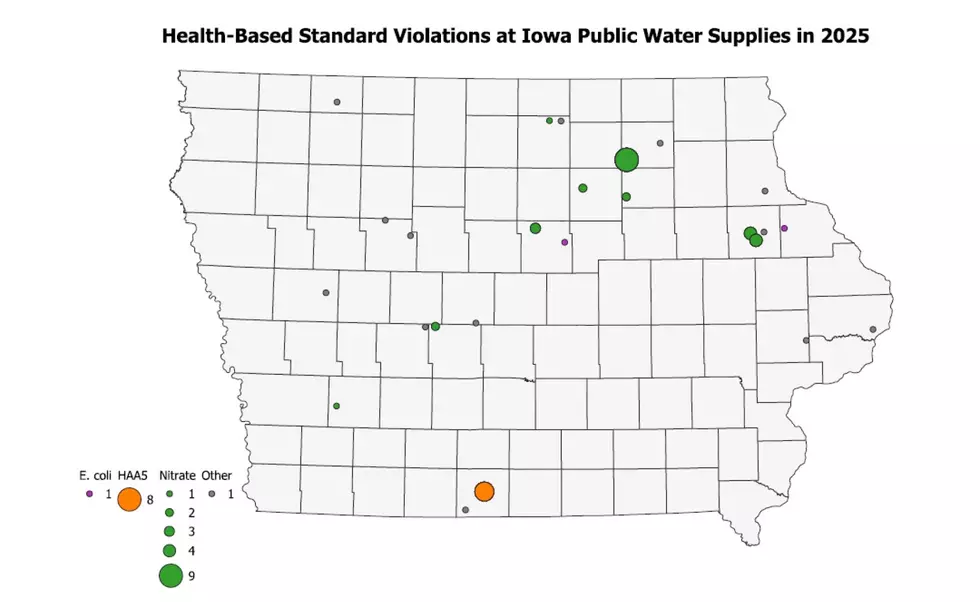
The state of Iowa recorded approximately 36 nitrate-related drinking water violations in 2025, which is more than double the 14 violations that were reported in 2024. These 36 violations happened across 13 different water supply systems, which affected nearly 2,500 customers statewide. Nitrate violations alone made up 41% of all health-based standard violations in the entire state last year, making it by far the most common issue in Iowa. Keep in mind that this isn't a one-year fluke either. Iowa similarly had 38 nitrate violations back in 2023 as well, with 2023 and 2025 standing out as significantly worse years compared to the rest of the decade.
But Why is Nitrate in the Water in the First Place?
Nitrates can simply enter water sources through the natural decay of organic matter, commercial fertilizers, human waste, and farm animal waste. Since Iowa has a heavy agricultural presence, this makes Nitrate a persistent issue, especially in spring and summer when heavy rains flush nutrients off farmland and into rivers. Nitrate concentrations in major rivers, such as the Des Moines and Raccoon rivers, reached near-record high levels during the summer of 2025, leading to the first-ever lawn watering ban in the Des Moines metro area. The nitrate levels stayed elevated well into the winter, which actually forced additional action into early 2026.
So Why Should This Matter to You?
To keep it frank, nitrate in drinking water is NOT just a regular and forgettable inconvenience. Nitrate in your drinking water is a genuine health risk. Consuming water with nitrate concentrations above the EPA limit of 10 milligrams per liter can be fatal for infants under six months old, as it affects the blood's ability to carry oxygen and can cause a condition called methemoglobinemia, which is also known as “blue-baby” syndrome. Some research even suggests that nitrate levels below the EPA maximum could have some really, really negative health effects, and even some Iowans believe elevated nitrate concentrations in the state have contributed to its high cancer rates, with Iowa being in the top five for highest cancer rates in the United States.
What's Being Done About It? (P.S., It’s Not Much).
Several of the water systems in Iowa with nitrate violations are currently installing treatment systems or connecting to other water supply systems to address the issue. Keep in mind that this has been a problem for years now. On the monitoring side, about 20% of Iowa's public water supply systems had major reporting and monitoring violations in 2025, which meant that some systems weren't even properly testing or documenting their water quality in the first place. About 95% of Iowans, which is over 3.12 million people, are served by public water supply systems, so these issues with Nitrate in the water supply affect nearly everyone in the state of Iowa. Even if you're on a private well, it's definitely worth getting your water tested independently since those systems fall outside of this report.
LOOK: Every state's nickname and where it comes from
Gallery Credit: Stacker
More From 97X
![Pipe Bursts Inside Baked Beer & Bread Co. In Davenport [VIDEO]](http://townsquare.media/site/711/files/2021/02/Baked-Beer-Bread-Co..jpg?w=980&q=75)